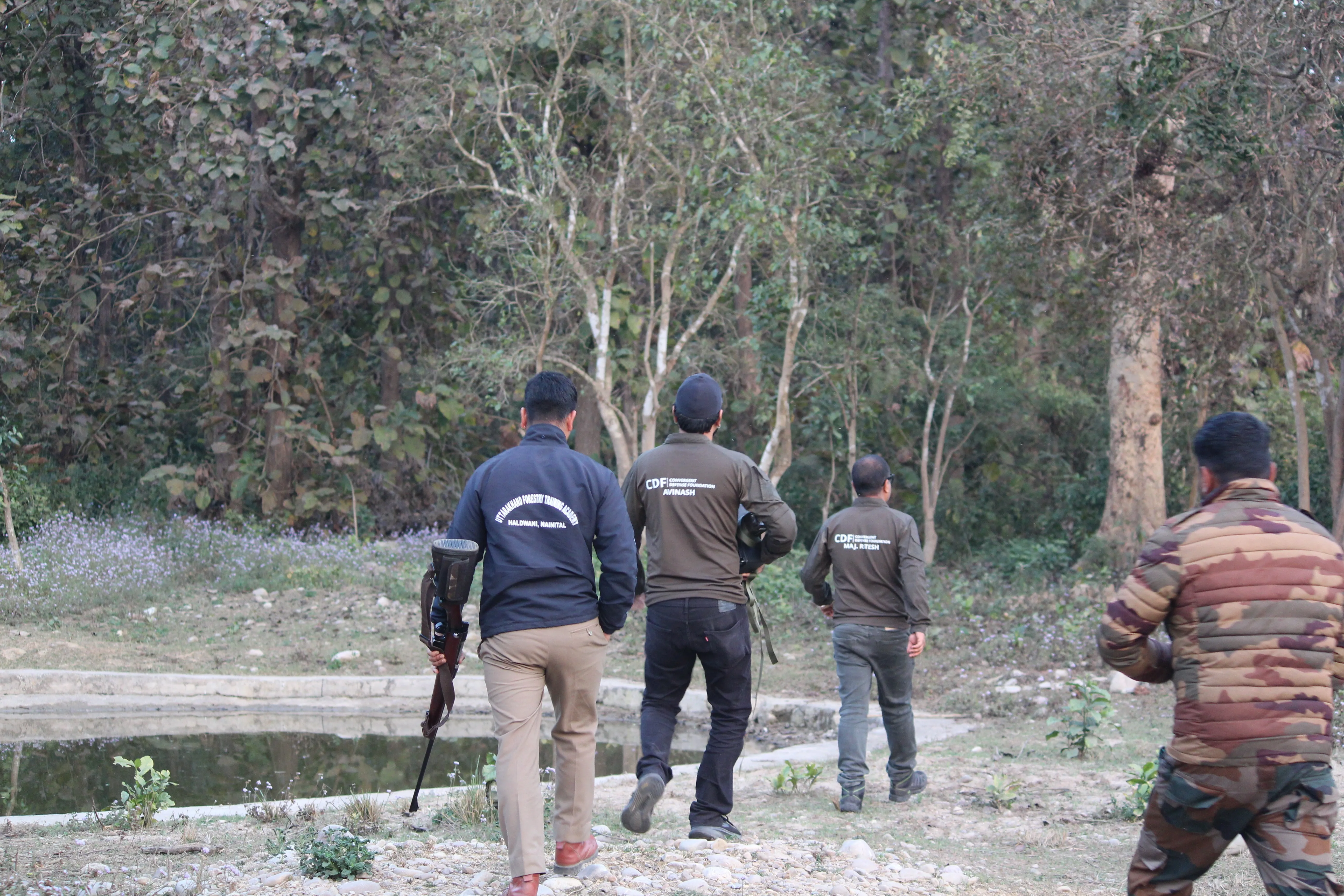
TALON
Tactical Awareness, Location & Operations Network
Watching a forest nobody can patrol all night
Forest departments look after vast, remote areas with few people and little infrastructure. Deep in the forest there is no phone signal, so even when something is seen, there is often no way to report it in time.
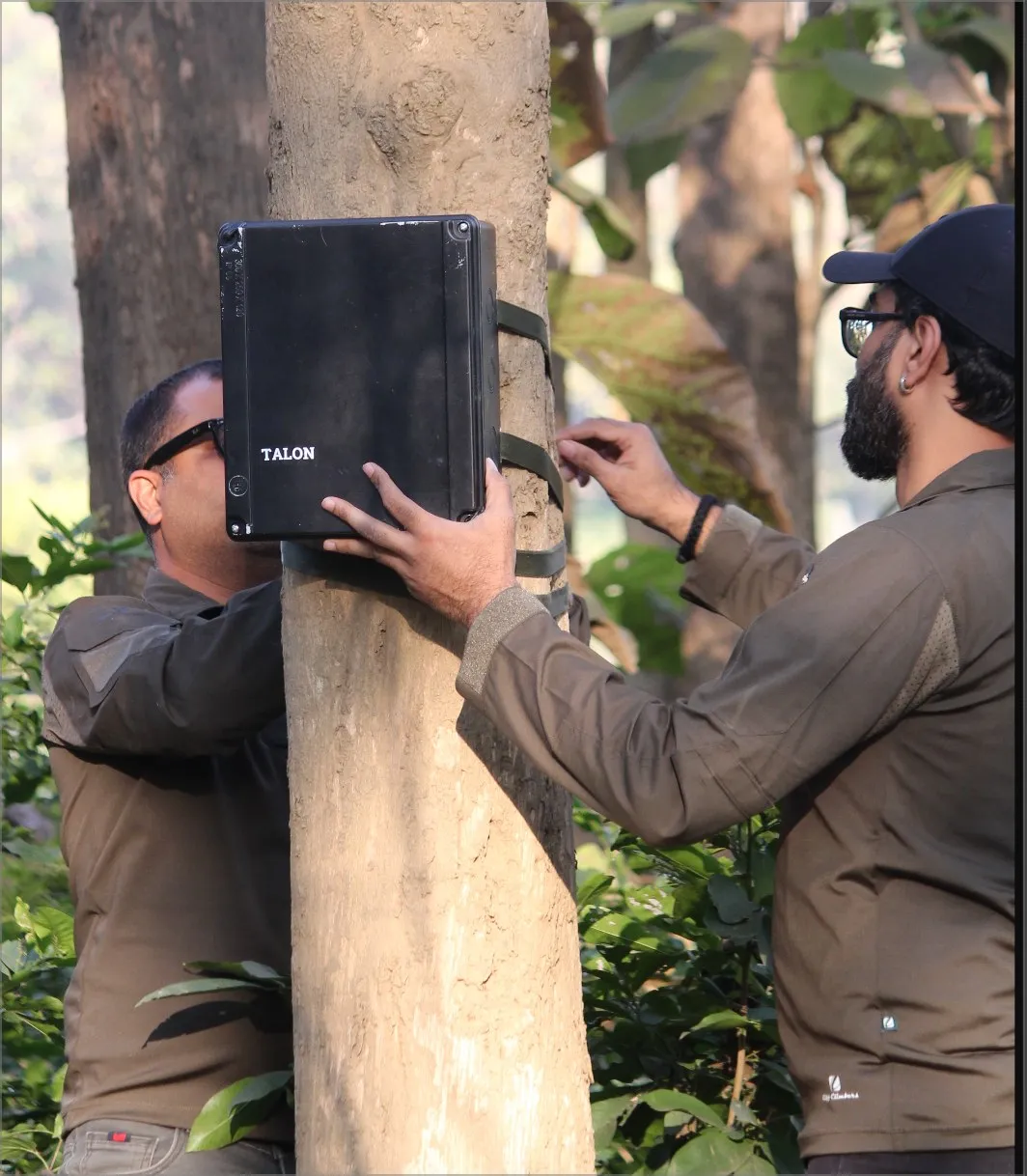
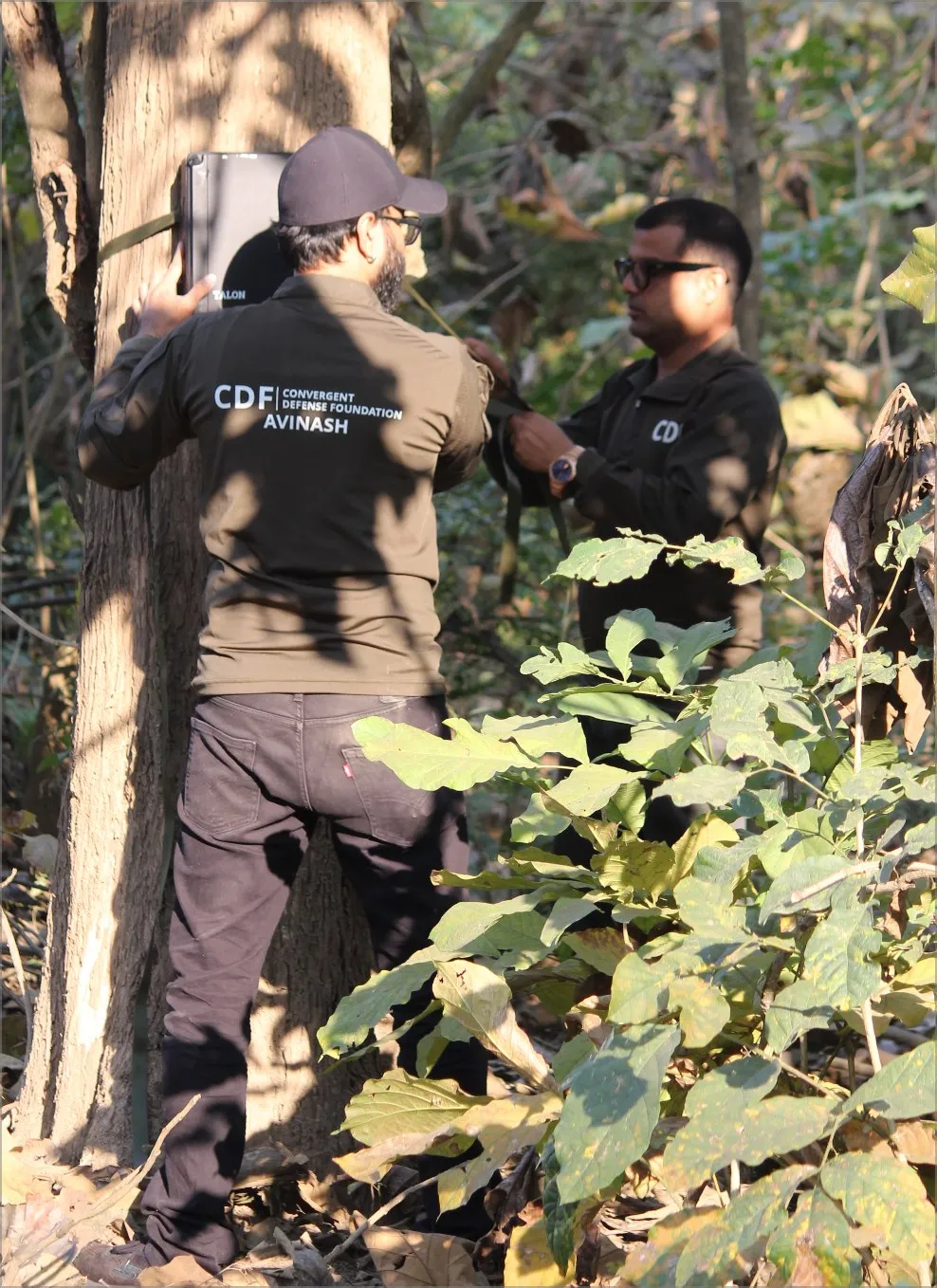
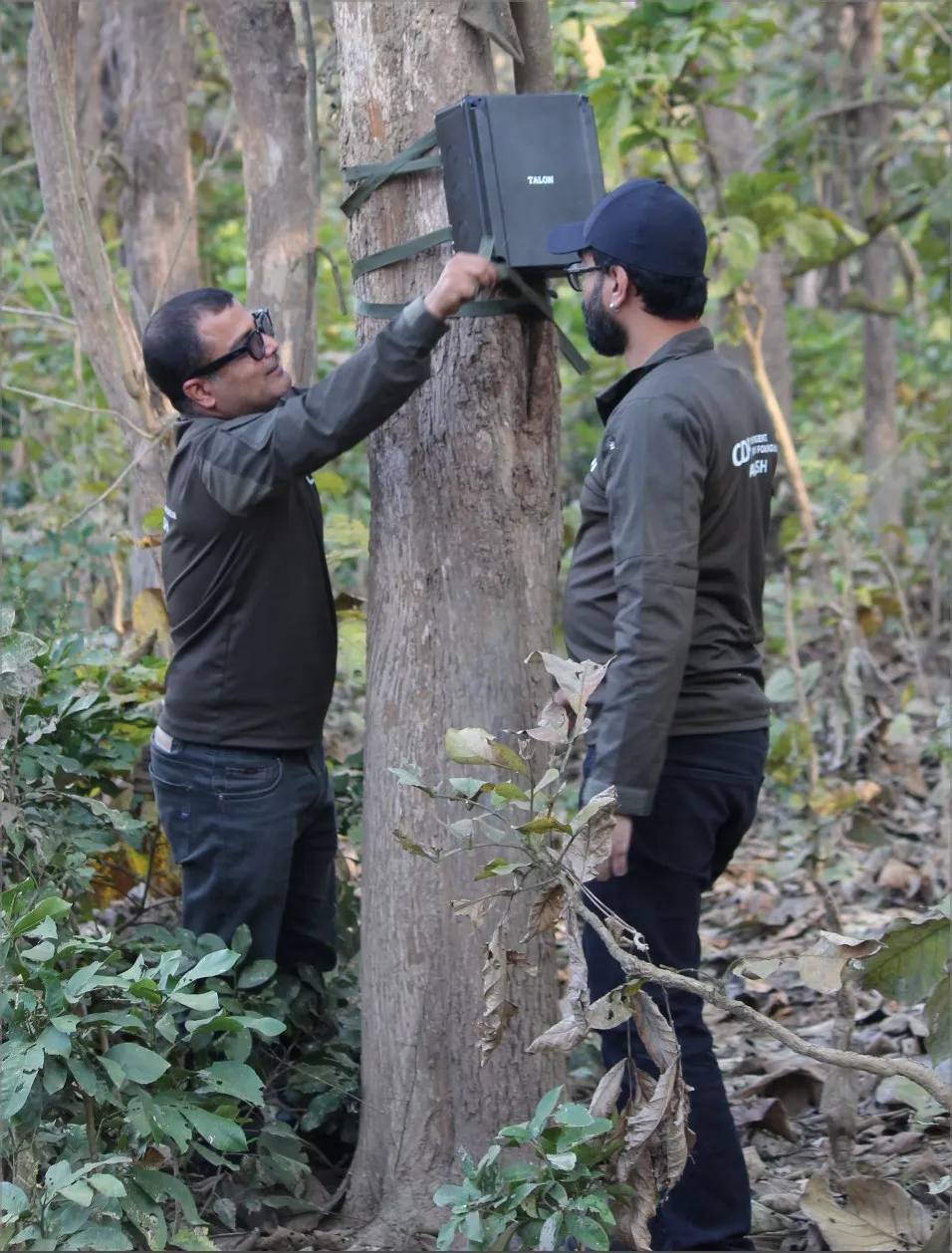
TALON is a network of small, self-contained nodes strapped to trees. They watch through trail cameras and pass what they see, node to node, to a command centre, so rangers know within minutes without anyone having to be there.
- Poaching and wildlife trafficking beyond the reach of ranger patrols
- Illegal logging that exploits gaps in surveillance
- Forest fires that are hard to spot early in remote zones
- No cellular coverage in deep forest, so no way to send an alert
- Risk to rangers watching hostile ground at night
- Trail cameras whose flash disturbs wildlife
- Cameras stolen by poachers
How it works
Two radio networks side by side: one for images and audio, one for emergencies.
Long-range data mesh
A low-power radio mesh, chosen to carry images and audio through dense forest canopy where ordinary Wi-Fi struggles.
Separate emergency channel
A second, independent radio link carries SOS alerts and short MAYDAY voice messages, and keeps working if the data mesh degrades.
Store-and-forward routing
Images, audio and sensor data are staged at each node and passed on along the best path to the gateway, so a link that drops for a while does not lose the data.
Works with existing cameras
Camera nodes fetch images from an attached trail camera and inject them into the mesh. It works with commercial trail cameras.
One night in an Uttarakhand forest
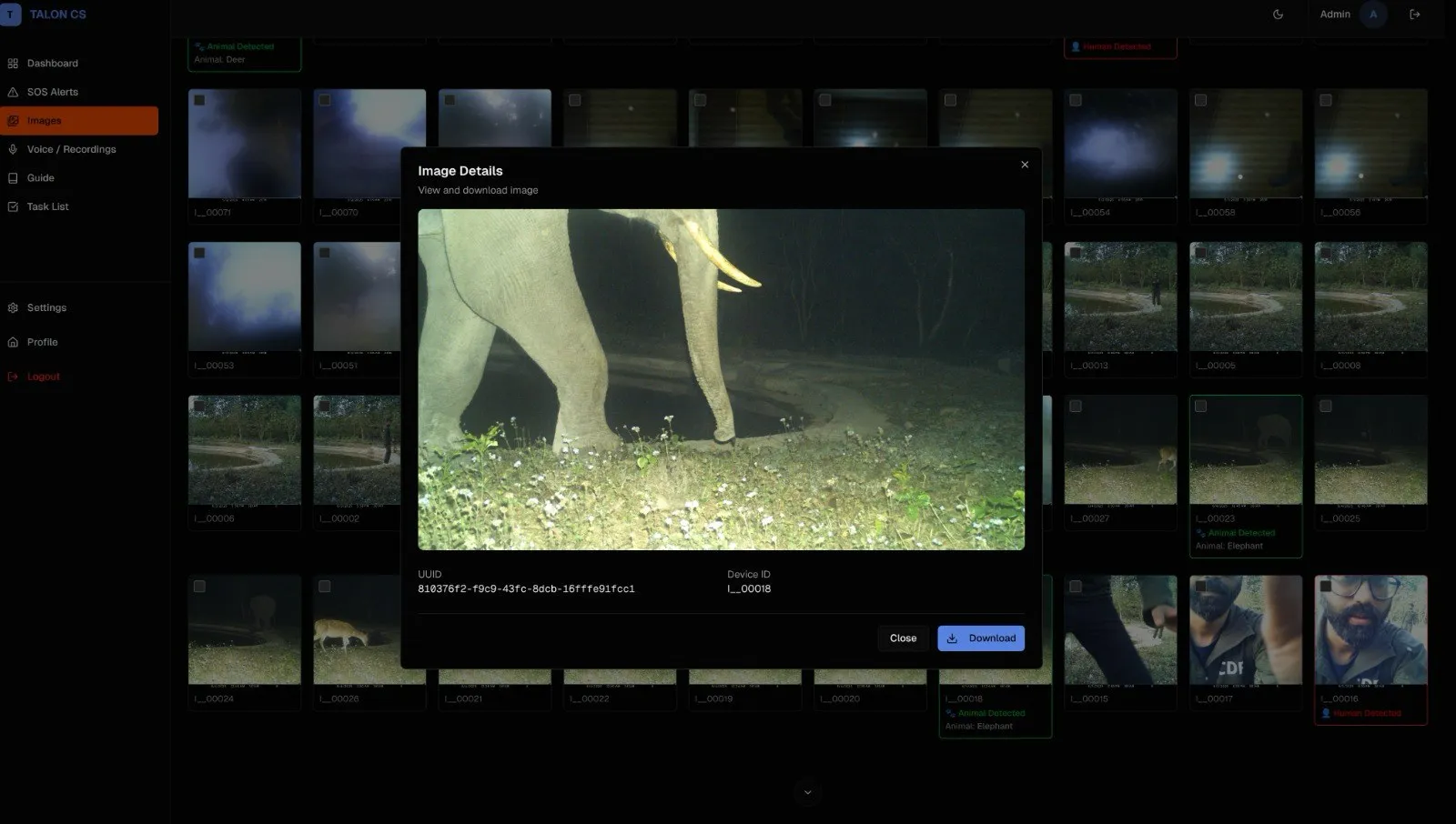
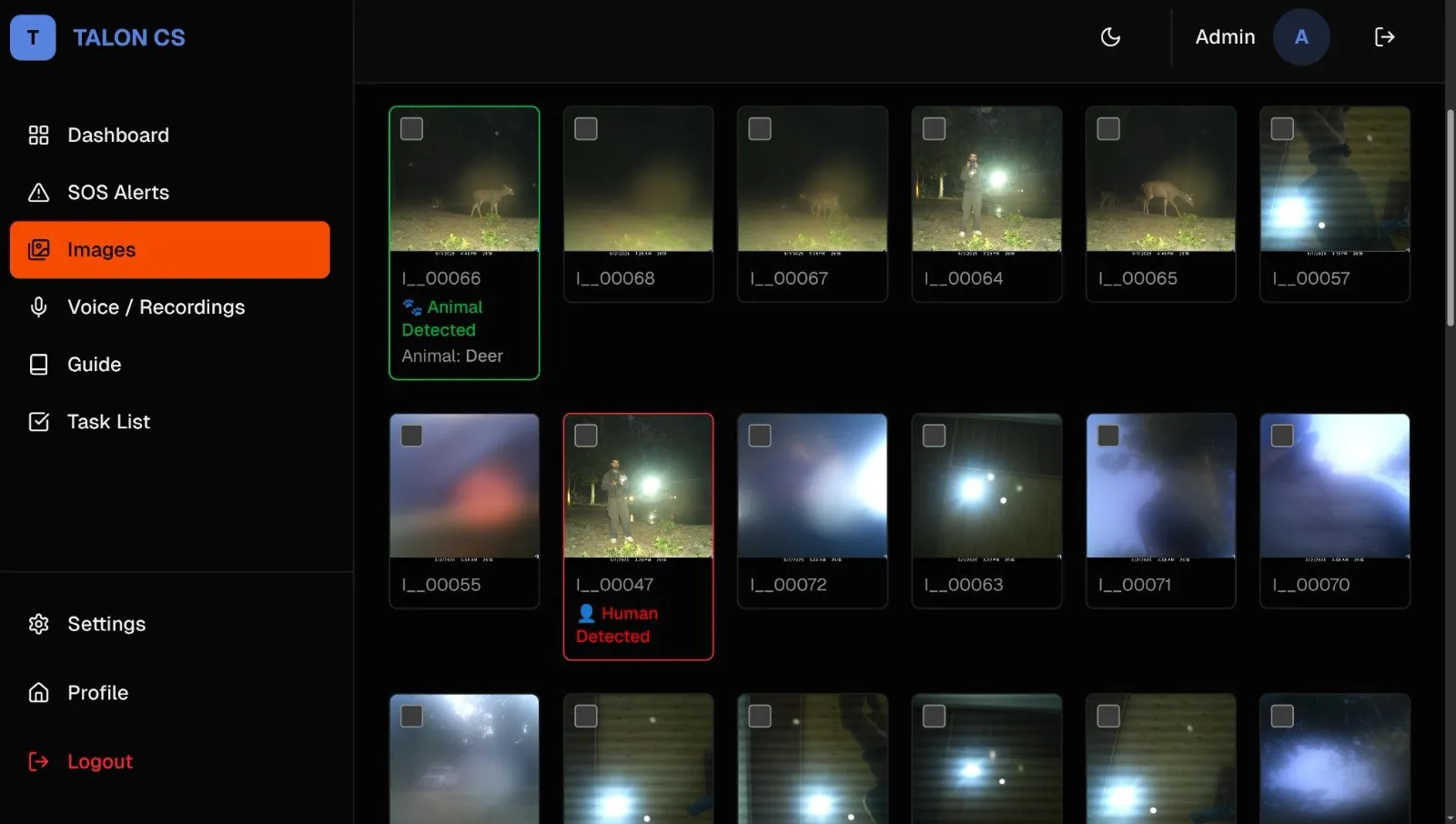
TALON's first field trial ran overnight for 14 hours in a forest division in Uttarakhand, with the state forest department. A five-node chain captured and delivered every image it detected, with nobody present at the nodes.
Trial details
- Location
- A forest division in Uttarakhand
- When
- February 2026, overnight
- Nodes
- 5 in a linear chain: 2 camera nodes, 3 routing nodes
- Alert time
- Within minutes of the camera being triggered
- Conditions
- Dense forest, at night, nobody at the nodes
What it saw
- Tusker (Asian elephant)High-priority detection, relayed in near real time
- Sambar deerCaptured and transferred through the mesh
- Spotted deer (chital)Several detections, all transferred
What we observed
- Ran fully on its own for the whole 14 hours, with no manual intervention at any node.
- All five nodes stayed connected through the night, with no dropouts.
- The emergency channel stayed active throughout, independent of the data mesh.
The tusker matters most. Elephants moving near the forest edge are a concern both for conservation and for the villages nearby, and TALON picked one up and relayed it with nobody at the node.
What it is for
Human–wildlife conflict
Early warning when elephants or other large animals move towards the forest edge and nearby villages.
Anti-poaching and logging
Detect people where they should not be, in areas patrols cannot cover every night.
Ranger safety
An SOS and MAYDAY voice channel that works where there is no phone signal.
Remote monitoring
A watch on remote stretches of forest without stationing anyone there, with fire detection among the uses being explored.
Capabilities
What comes next
The trial was a first step. The compact node is finished, and the next device is in development.
The TALON edge device
The compact TALON node is finished. The next step, shaped by the trial and by discussions with the forest department, is a unit that also does the sensing itself, instead of relying on a separate trail camera.
- Integrated camera with infrared night vision
- GPS
- Long-range mesh that carries audio and video
- SOS and peer-to-peer emergency broadcast
Help make TALON better
Since the trial we have built TALON into a finished, compact node, much smaller than the prototype boxes used in the field. Funding now goes into making it better and getting it into more forests. As a non-profit we rely on grants and donations for this work.
The TALON edge device
Adding a built-in camera, infrared night vision and GPS to the node, so it no longer depends on a separate trail camera.
Tougher in the field
Hardening the compact node for long deployments: weatherproofing, and making it harder to spot and steal.
Longer range and faster transfer
Antenna, radio and protocol work so each node reaches further and moves images and audio faster.
Power that lasts
Nodes already run 30 to 45 days on one charge. Next come larger batteries and trials of a small solar panel that recharges each node automatically, so it can stay out far longer between visits.
Bigger field trials
The next trial with 10 or more nodes across a wider stretch of forest, with the forest department.
Funders can support a specific improvement or the programme as a whole. We share progress and results from every trial.